// work with EDI in your terminal
tedi CLI
The official command-line client for Tediware.
tedi is the
open source
command-line client for the Tediware API.
There's no other tool like it for EDI professionals that are working on the command line, inside terminals and with coding agents.
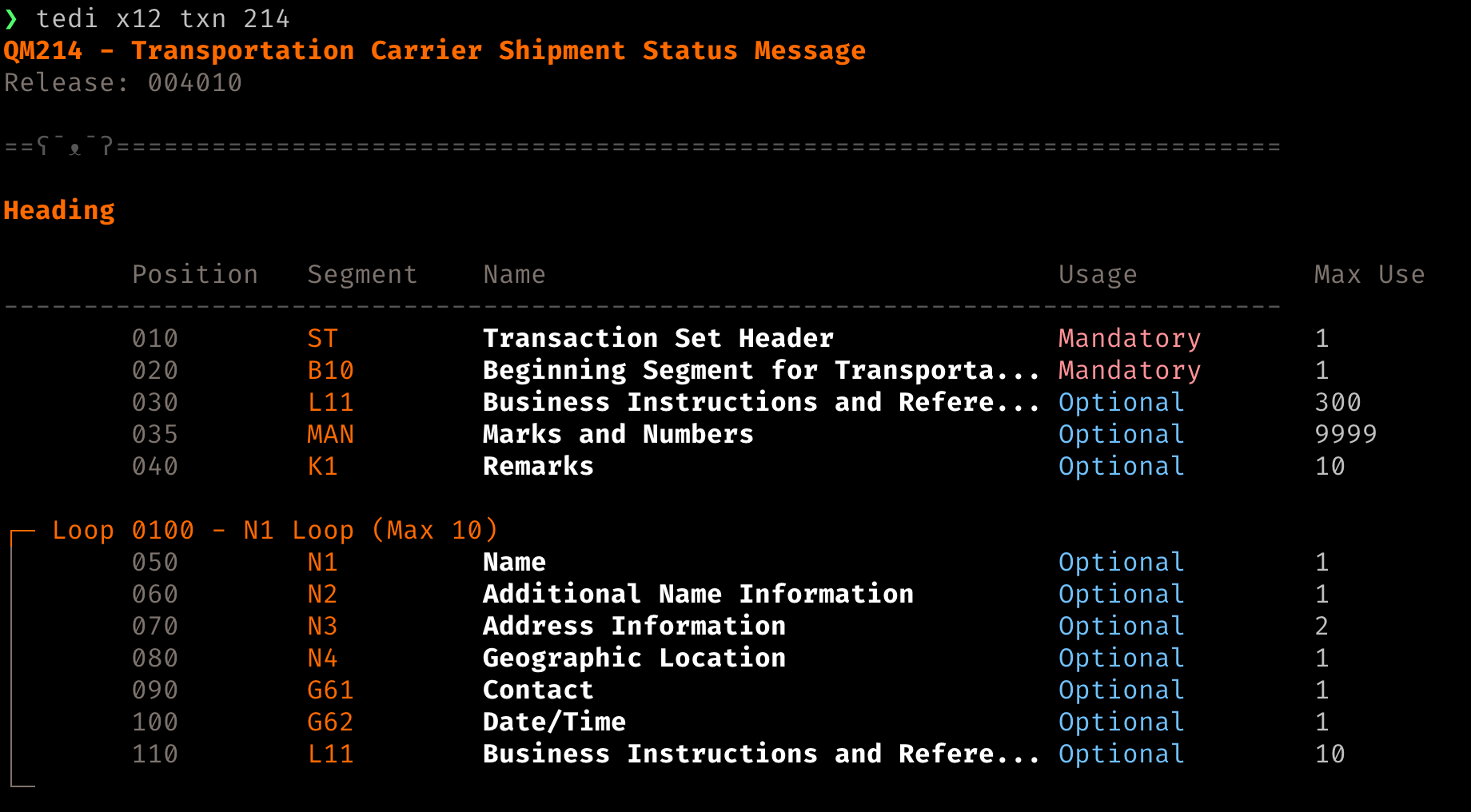
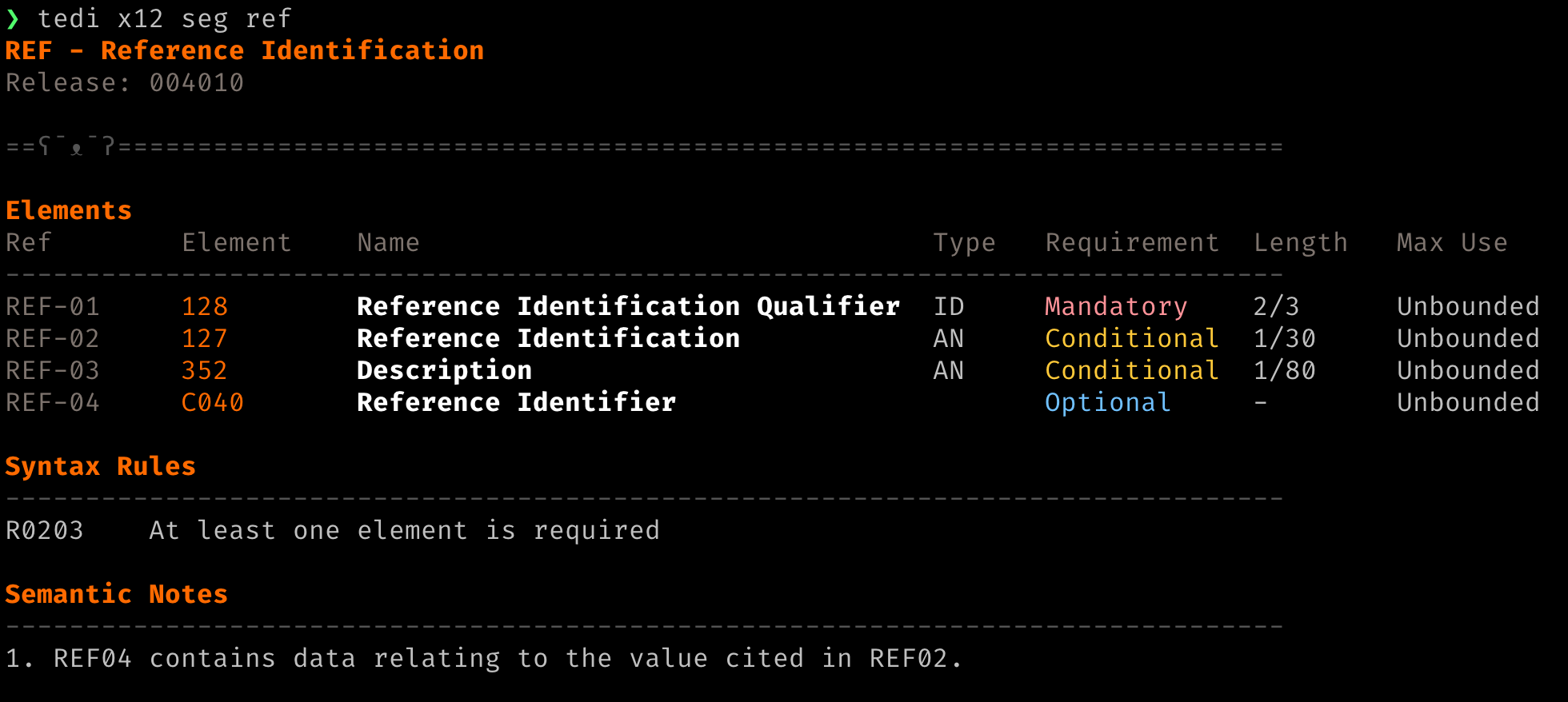
Easily access every X12 transaction set, segment and element. Inspect, decode, validate and obfuscate EDI documents. We're just getting started. Install it now to participate in the future of EDI development.
Requirements
- Node.js 18.19 or newer, which includes
npm. - An API key. X12 reference access requires acceptance of the current service terms as a condition of Tediware's X12 license. Sign up free, accept the terms, then create a key on the API keys page.
Install
Install the CLI globally with npm:
npm install -g @tediware/tediAuthenticate
Sign in once with your API key. The key is entered without echo and stored locally, so it never lands in your shell history.
tedi auth loginLook up the X12 reference
Query segments, transaction sets, and elements by id:
tedi x12 seg N1      # look up a segment
tedi x12 txn 214     # look up a transaction set
tedi x12 ele 235     # look up an element and its code list
tedi x12 releases    # list supported X12 releases
Every x12 command takes --release
to pick the X12 release and --format markdown for clean,
uncolored output you can pipe or redirect.
Change the default release with tedi config set:
tedi config set x12.release 005010Work with your own EDI files
The edi commands operate on a document you have:
tedi edi inspect invoice.edi     # decode and validate a document
tedi edi obfuscate invoice.edi   # replace personal data, runs locally
inspect sends the document to the platform and prints it
decoded against the X12 standard, with envelope details, named segments and elements, and any
compliance findings. Add --format markdown for uncolored
output you can pipe or redirect. obfuscate runs entirely
on your machine and never uploads the file.